Pages

Showing posts with label Women in Audience. Show all posts

Thursday, March 10, 2011

Shakespeare's feminine audience

Continuing with my overall focus on women in Shakespeare, this post will carry on the discussion I began with my introduction to women as audience members in Elizabethan England. By showing that the female audience was substantial and had significant financial and societal power, I hope to prove that Shakespeare was influenced to write strong, witty, and often powerful female characters.

First, it is important to note the fact that many playhouses and playgroups had women patrons. Phyllis Rackin observes that "the offstage presence of women would have exerted a powerful influence upon playscripts." She gives such examples as the Queen's Men, under the patronage of Queen Elizabeth,


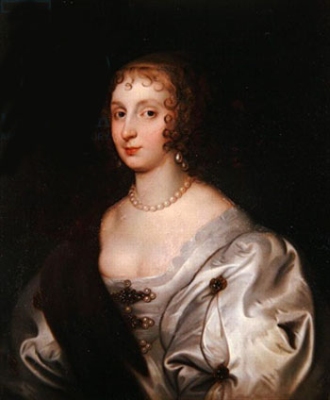
as well as during the reign of the Stuarts, when "Queen Anne, Lady Elizabeth, and Queen Henrietta all issued patents to the companies that took their names" (46). It seems obvious that if a business venture is being supported by a powerful women, the playwright would take care not to offend their patron by writing disagreeable female characters.


Queen Anne
Lady Elizabeth
Queen Henrietta
Continuing from economic point of view, scholarship has shown that women often made up a large part of a playhouse's audience. Rackin comments on this, writing that "players derived the bulk of their income from public performances" and that they "would have been influenced by the fact that women constituted a sizeable proportion of the paying customers in the public playhouses, perhaps more that half" (46). Again, if a playhouse wanted success, it was a simple matter of catering to their consumers. Although women weren't directly involved in the writing or performing of a play, one can still see their influence on Shakespeare's characters because of their attendance and financial power. Seeing it from this business stance, Richard Levin proposes a similar idea (in his article "Women in the Renaissance Theatre Audience), that although "women were not represented at the production end of this industry, they certainly were at the consumption end, and so probably had some effect upon its products" (174).

One last note: it is clear that there were women of all different levels of society in attendance at the playhouses. That being said, it shouldn't be much of a surprise that while many of Shakespeare's more suggestive lines may make us blush, it would have been something enjoyed by his audience, including women. In fact, according to John Crawford, "writers like Robert Anton and John Davies suggest in their work that women of the time loved bawdy verse, especially verse like Shakespeare's Venus and Adonis, and even wrote such verse themselves" (9). Obviously referring to poetry, it is not a stretch to believe the same could be said of Shakespeare's bawdy humor within his plays. Thus we see that women, instead of being embarrassed or even turned away from the playhouses for including such language, were probably the ones most enjoying it. This idea shows that research striving to prove that women did not attend or even like Shakespeare's work because of his sexual humor is false.

Works Cited

Rackin, Phyllis. Shakespeare and Women. New York: Oxford University Press, 2005. 
Levin, Richard. "Women in the Renaissance Theater Audience." Shakespeare Quarterly. 40.2 (1989): 165-174.
John Crawford. The Learning, Wit, and Wisdom of Shakespeare's Renaissance Women.  Lewiston: The Edwin Mellen Press, 1997. 

Thursday, March 3, 2011

Women as audience members

As students studying Shakespeare, we all know that one of the reasons his plays are so long-lasting was his ability to appeal to many different types of people, including women. It is easy to forget that women made up a significant part of Shakespeare's audience. We often focus on how the women's roles were played by men or how the bawdy and racy humor alluded mainly to male viewership. However, several scholars have studied how Shakespeare's plays may have been attended by many women, all from all different classes and distinctions.

The first is Phyllis Rackin, who I've quoted in a previous post. Like I mentioned before, Rackin discusses how in order to make a profit "even the private playhouses catered to women as well as men" and that "they included applewives and fishwives, doxies and respectable citizens, queens and great ladies" (24-25). She also concludes that "because playing was a commercial enterprise, it was in the players' interests to please as many of the paying customers as they could, the women no less than the men" (25). It is my deduction that if a woman was not "pleased" by a play, she would not be a repeat customer. This meant that the playhouse also lost the business of her husband and household, as well as those whom she may have told about the play. A wise business decision would then be to simply make the customer happy.

The second scholar who has researched the idea of women as audience is Richard Levin in his article "Women in the Renaissance Theatre Audience." He quotes three different passages from Shakespeare's plays in order to assert that he "was aware of women as a distinct component of his audience that he had to please" (168). Here's one example from Henry IV:
All the gentlewomen here have forgiven me; if the gentlemen will not, then the gentlemen do not agree with the gentlewomen, which was never seen in such an assembly.
This quote not only shows the power that women had over the opinions of men (at least in the context of a playhouse) but that Shakespeare recognized women's financial power as well.

I will continue this train of thought in my next post, but I hope this gives a good idea of what I'm aiming for in my research. I'll be holding off on thematic and character analysis until I've established some historical and cultural background to base my ideas on, so the next few post will be more about Shakespeare's audience as well as the women in his life.

Works Cited
Rackin, Phyllis. Shakespeare and Women. New York: Oxford University Press, 2005.
Levin, Richard. "Women in the Renaissance Theater Audience." Shakespeare Quarterly. 40.2 (1989): 165-174.