Pages

Showing posts with label Analyze Shakespeare Critically. Show all posts

Monday, April 4, 2011

The final conclusion: The female influence on Shakespeare's writing

Throughout the semester, I have been developing the topic of women and Shakespeare, and I feel that I have researched, analyzed, and written a variety of posts that support my argument. My original ideas have evolved from my previous post to this much more developed and thought out....drum roll please...


Although Shakespeare has often been credited with writing strong, independent, and intelligent female characters (which has inspired much lively feminist debate), this issue has generally been analyzed only from a textual point of view. With this blog, I chose to research contextual and historical evidence as well.

Thesis

Shakespeare, because of his female audience, patrons, and familial relationships, was influenced financially and personally to write spirited female characters.

Evidence

1. Audience: I've looked at several important aspects of Shakespeare's female audience. First, that women made up a large percentage of a playhouse's audience, that there were women from all class distinctions, and that women often had power over their husband's opinions. Second, many playhouses had female patrons, such as Queen Elizabeth, Queen Anne, and Queen Henrietta. These facts help to prove that the female audience was substantial and had significant financial and societal power.

2. Education: Here I show that Elizabethan women were not as illiterate and ignorant as many Shakespeare scholars might assume. It was often necessary for middle-class women to read in order to run their households, as well as educate their own children. Also, many male writers were advocating for female education during Shakespeare's life, showing that there was some acknowledgment of women's intelligence. 

3. Relationships: I examined several of Shakespeare's personal female relationships, including his mother, his extended family and wife, and Queen Elizabeth, in order to show the influence they would have had on his writing. 

4. Character Analysis: I analyzed several of Shakespeare's female characters to show their independence and intelligence, traits he would have seen first hand from the women in his life. These include main characters such as Kate, Hermione, Lady Macbeth, and Portia, as well as minor characters like Paulina and Miranda

Conclusion

Shakespeare was above all a playwright, influenced by financial gain. Therefore, he could not afford to ignore the educated and opinionated women that made up much of his audience. However, it may not have been financial gain alone that fueled his writing. Because he grew up in a predominantly female world (his mother, aunts, cousins, wife, and Queen Elizabeth), it is probable that his childhood and female relationships inspired him to give his female characters qualities that made them independent, witty, powerful, and above all, appealing to the female world. 

Sunday, April 3, 2011

The women's part: Shakespeare's feminist leanings

I'm going to start with some disclaimers about my thesis. My basic argument is that because of the influence of his female audience, patrons, and personal relationships with women, Shakespeare wrote female characters that were independent, intelligent, and strong. I will even go so far as to suggest he was a proto-feminist, since he recognized the worth of the female mind. I know there are some objections to this idea, which I will address here.


As brought up by Chris Welcker in a comment to one of my previous posts, Shakespeare wasn't always respectful to women. This can be seen in the case of his wife, Anne Hathaway. Anne (although not a complete pushover, as I discussed here) was apparently not an overly critical part of Shakespeare's life. There are few remaining records of her activity in Stratford, and none at all to suggest she had anything to do with her husband's business dealings at the theater. Phyllis Rackin thinks part of this may have to with Shakespeare's lack of trust and confidence in his wife. She states: "A possibility is that William did not trust Anne to manage the family property. Her absence from the legal records of all William's financial affairs might mean that Anne had an exceptionally passive role in the economic affairs of the Shakespeare family" (39). 


So although I admit that there is evidence for the idea that Shakespeare wasn't respectful to all women, there is also substantial proof that despite this, he was still influenced by the many women in his life. Whether he truly admired them or simply wrote the female characters for financial gain is something that cannot be known for sure.


Now that I've shared some opposing views to my thesis, I can approach my topic from a textual standpoint by analyzing the female characters in Shakespeare's plays. I've previously discussed Portia and Paulina, along with Miranda, as good examples of intelligent female characters. For this post, I've chosen two main characters from different plays to help prove my thesis.


Thursday, March 24, 2011

Fanfiction: a new digital mediation for Shakespeare


I decided to take a break from my serious research for this post and share my experiences with Fanfiction to take a shot at analyzing digital mediations. For those of you unfamiliar with Fanfiction, it's a website where you can post your own writing that you based on other books, plays, movies, TV shows, or even comics. Generally, you post in sections, or chapters, and other readers can leave reviews with helpful criticism or encouragement. There are thousands of writers on this site, and so you can imagine exactly how many reviews and new stories are being posted every day. Just as an example, the Harry Potter section has over 500,000 stories. These range from short stories, poetry, and even epics that literally take years to write.

When in middle school and high school, I have to admit that I was pretty obsessed with Fanfiction. I would spend hours reading other's stories, and then eventually writing my own. This was a major part of why I wanted to be a English major and then go on to be an editor or writer. It was amazing to be able to write and get feedback, as well as help others improve their own writing.

I decided that although I usually spent most of my time in the Harry Potter or Ella Enchanted sections (dorky, I know, but I loved it), I wanted to see what Fanfiction could offer fans of Shakespeare. I followed the links from Plays to Shakespeare, where the Bard has a respectable following of 1,762 stories (this is in comparison to Les Mis, 121, and Oedipus the King, 4). Just glancing through the first page of stories, I saw some really interesting ideas for creatively imitating Shakespeare. For example, one author puts a pirate theme on a female version on Hamlet:


Her father dead, her uncle takes the title of Pirate King aboard the ship the Denmark. But when she finds out how her father really died, revenge fills her heart and mind.


Although this writer probably isn't the next Shakespeare, it's clear that she is very familiar with the text of Hamlet, and has creatively changed the setting and plot to make it her own. Fanfiction is awesome!

This has really inspired me to try and fulfill one of my other learning outcomes, literary imitation. In the next couple weeks, I'm going to write a short story about one of Shakespeare's characters, possibly from a unique point of view, and then post it on Fanfiction and see what kind of response I get. I think this will be a really fun way to creatively engage Shakespeare while also sharing my work with people outside our class. I know that lots of people in this class are doing some sort of literary imitation, and I think this would be an extremely effective way to share besides on our blogs.

Wednesday, March 16, 2011

Elizabethan women: smarter than you think

Many students the Renaissance assume the worst for women of the period: unequal rights, inability to inherit, lower social status, and virtually uneducated. While these obviously stem from truth, there were many exceptions to the "rule," and not just in the noble and upper classes either. John Crawford, author of The Learning, Wit, and Wisdom of Shakespeare's Renaissance Women, observes that for many women of the middle-classes, literacy was a necessity. He writes,
A gentlewoman was supposed to read the Bible and conduct family worship in the absence of the father. A good housewife had to consult the almanacs for proper bloodletting time; to discover in the herbal handbook the best medicine for specific illnesses; cookbooks and sewing books were available. (6)
If women didn't have the skill to read, it often limited her abilities to perform her household duties. Therefore, girls (although not allowed at universities and local grammar schools) were instructed by their mothers in a manner similar to the boys. This instruction included religion, morals, manners, speech, and reading. Girls' educations were furthered by instruction in the economy of a household, food preparation, and organization. Also, observes Crawford, "Knowledge of herbs, often thought of as medicine, was sometimes associated with the women of the Middle Ages" (7). This was partially examined in an earlier post, describing Ophelia's madness in Hamlet and how her knowledge of plant life gave a significantly different meaning to the scene.

Besides the existing opportunities for female education during the Renaissance, there were also many writers, male writers, who advocated education for women. In Thomas More's Utopia, the author allows "the education of women on a equal basis with that of men," while Sir Thomas Elyot's The Defense of Good Women supports "the wise training of women in letters and in moral philosophy" (Crawford 10).

Thus we see the undeniable connection between Shakespeare and his educated, female audience. By the end of the sixteenth century, "the feminine audience had reached such proportions that many authors were making a definite and frank appeal to women" (Crawford 13). Not only did women make up a large percentage of the playwright's audiences (as discussed here), but by establishing that the women were literate and intellectually trained, it can be assumed that Shakespeare acknowledged, even respected, the minds and opinions of his women viewers, and wrote plays and characters that would appeal to their senses as well as the men's.

Works Cited

John Crawford. The Learning, Wit, and Wisdom of Shakespeare's Renaissance Women.  Lewiston: The Edwin Mellen Press, 1997. 

Thursday, March 10, 2011

Shakespeare's feminine audience

Continuing with my overall focus on women in Shakespeare, this post will carry on the discussion I began with my introduction to women as audience members in Elizabethan England. By showing that the female audience was substantial and had significant financial and societal power, I hope to prove that Shakespeare was influenced to write strong, witty, and often powerful female characters.

First, it is important to note the fact that many playhouses and playgroups had women patrons. Phyllis Rackin observes that "the offstage presence of women would have exerted a powerful influence upon playscripts." She gives such examples as the Queen's Men, under the patronage of Queen Elizabeth,


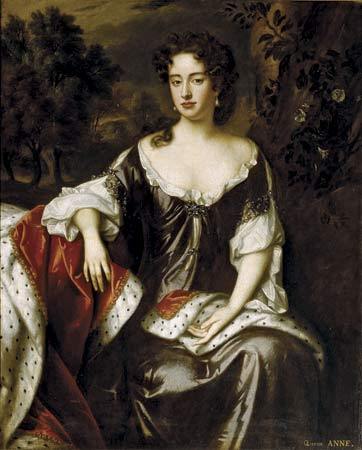
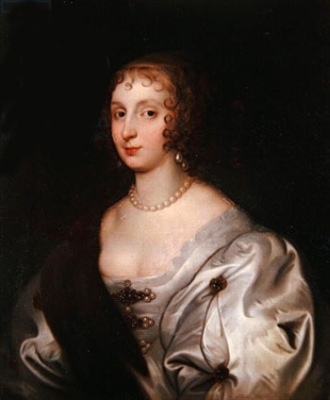
as well as during the reign of the Stuarts, when "Queen Anne, Lady Elizabeth, and Queen Henrietta all issued patents to the companies that took their names" (46). It seems obvious that if a business venture is being supported by a powerful women, the playwright would take care not to offend their patron by writing disagreeable female characters.


Queen Anne
Lady Elizabeth
Queen Henrietta
Continuing from economic point of view, scholarship has shown that women often made up a large part of a playhouse's audience. Rackin comments on this, writing that "players derived the bulk of their income from public performances" and that they "would have been influenced by the fact that women constituted a sizeable proportion of the paying customers in the public playhouses, perhaps more that half" (46). Again, if a playhouse wanted success, it was a simple matter of catering to their consumers. Although women weren't directly involved in the writing or performing of a play, one can still see their influence on Shakespeare's characters because of their attendance and financial power. Seeing it from this business stance, Richard Levin proposes a similar idea (in his article "Women in the Renaissance Theatre Audience), that although "women were not represented at the production end of this industry, they certainly were at the consumption end, and so probably had some effect upon its products" (174).

One last note: it is clear that there were women of all different levels of society in attendance at the playhouses. That being said, it shouldn't be much of a surprise that while many of Shakespeare's more suggestive lines may make us blush, it would have been something enjoyed by his audience, including women. In fact, according to John Crawford, "writers like Robert Anton and John Davies suggest in their work that women of the time loved bawdy verse, especially verse like Shakespeare's Venus and Adonis, and even wrote such verse themselves" (9). Obviously referring to poetry, it is not a stretch to believe the same could be said of Shakespeare's bawdy humor within his plays. Thus we see that women, instead of being embarrassed or even turned away from the playhouses for including such language, were probably the ones most enjoying it. This idea shows that research striving to prove that women did not attend or even like Shakespeare's work because of his sexual humor is false.

Works Cited

Rackin, Phyllis. Shakespeare and Women. New York: Oxford University Press, 2005. 
Levin, Richard. "Women in the Renaissance Theater Audience." Shakespeare Quarterly. 40.2 (1989): 165-174.
John Crawford. The Learning, Wit, and Wisdom of Shakespeare's Renaissance Women.  Lewiston: The Edwin Mellen Press, 1997. 

Thursday, March 3, 2011

Women as audience members

As students studying Shakespeare, we all know that one of the reasons his plays are so long-lasting was his ability to appeal to many different types of people, including women. It is easy to forget that women made up a significant part of Shakespeare's audience. We often focus on how the women's roles were played by men or how the bawdy and racy humor alluded mainly to male viewership. However, several scholars have studied how Shakespeare's plays may have been attended by many women, all from all different classes and distinctions.

The first is Phyllis Rackin, who I've quoted in a previous post. Like I mentioned before, Rackin discusses how in order to make a profit "even the private playhouses catered to women as well as men" and that "they included applewives and fishwives, doxies and respectable citizens, queens and great ladies" (24-25). She also concludes that "because playing was a commercial enterprise, it was in the players' interests to please as many of the paying customers as they could, the women no less than the men" (25). It is my deduction that if a woman was not "pleased" by a play, she would not be a repeat customer. This meant that the playhouse also lost the business of her husband and household, as well as those whom she may have told about the play. A wise business decision would then be to simply make the customer happy.

The second scholar who has researched the idea of women as audience is Richard Levin in his article "Women in the Renaissance Theatre Audience." He quotes three different passages from Shakespeare's plays in order to assert that he "was aware of women as a distinct component of his audience that he had to please" (168). Here's one example from Henry IV:
All the gentlewomen here have forgiven me; if the gentlemen will not, then the gentlemen do not agree with the gentlewomen, which was never seen in such an assembly.
This quote not only shows the power that women had over the opinions of men (at least in the context of a playhouse) but that Shakespeare recognized women's financial power as well.

I will continue this train of thought in my next post, but I hope this gives a good idea of what I'm aiming for in my research. I'll be holding off on thematic and character analysis until I've established some historical and cultural background to base my ideas on, so the next few post will be more about Shakespeare's audience as well as the women in his life.

Works Cited
Rackin, Phyllis. Shakespeare and Women. New York: Oxford University Press, 2005.
Levin, Richard. "Women in the Renaissance Theater Audience." Shakespeare Quarterly. 40.2 (1989): 165-174.

Tuesday, March 1, 2011

Women on trial

As I was reading the scene from The Winter's Tale, I couldn't help but feel that Hermione was a type for all women of Shakespeare's day. Women were often seen throughout history as the originators of sin, because of Eve. It is very common to read about women as objects of desire, as disobedient wives and daughters, and even as witches. This makes Leontes' irrationality almost make sense: he's simply responding to centuries of prejudice against women. Obviously, we can't entirely excuse his tyrannical and jealous behavior, but I feel tradition gives him a reason to suspect his wife. Part of the fault lies with society.

Hermione, the perfect picture of innocence, chastity, and obedience, is representative of how women were expected to be. In the trial, however, she is made out to be exactly the opposite. Leontes falsely accuses her of treason and adultery, something the audience knows she is innocent of. In general, I believe that this scene perhaps demonstrates that women have been conceived of unfairly in history and in Shakespeare's day, and Hermione's and Paulina's lines give women the voice that they have been forbidden them for centuries. This is particularly interesting since eventually it is proven that Hermione is innocent, showing her true fidelity and obedience to the king.


Paulina's character was also very important to this scene, I believe. Once Hermione has died, there must be someone to defend the cause of women, and so Paulina rebukes the king for his actions (listing the people that have died or suffered because of him), and her speech includes some of the most powerful lines of the scene:
But, O thou tyrant!
Do not repent these things, for they are heavier
Than all thy woes can stir. Therefore betake thee
To nothing but despair. A thousand knees
Ten thousand years together, naked, fasting
Upon a barren mountain, and still winter
In storm perpetual, could not move the gods
To look that way thou wert.
Paulina tells it like it is, and receives no punishment for speaking her mind. She is told to be silent by a member of the court, and she herself immediately apologizes for the outburst, but no other punishment is inflicted. I feel that Paulina's speech and her sudden silence are also examples of how women's voices have been oppressed throughout history. She told nothing but the truth, something the king acknowledges when he states that "Thou didst speak but well When most the truth." However, although both she and Hermione spoke well, they were also eventually silenced.

What does this mean coming from a feminist standpoint? Hermione and Paulina are women who are oppressed despite their truthfulness, (Hermione by death and Paulina by the Lord) who are eventually recognized as honorable and steadfast. Shakespeare undoubtedly wrote many strong female characters that exhibit feminist qualities, but this is an example of plot that supports women in general as being true, constant, and loyal.

Friday, February 11, 2011

Comparing "Lears"


Like I said in my previous post, I'm going to focus this week on comparing the original version of King Lear and Shakespeare's take. Since I can think of no better way, I'm simply going to split this into two parts. There are a lot more than what I'm documenting here, so take a look of your own at the original (starting at section 11). This is not the same exact text that I used for my comparison (I used my Broadview Anthology) but it should suffice.

Similarities

The basic plot.  Both stories contain the same basic plot. Lear tests his three daughters on their individual declarations of love for him, Cordelia is sent to France, and Goneril and Regan eventually take power with their husbands.

The main characters. King Lear, along with his three daughters and their husbands, all remain relatively true to the original source. Lear is portrayed in both as the doting father with a temper, Cordelia as the innocent one, and Goneril and Regan and their husbands as the schemers and liars.

Dialogue. There are several specific scenes that are similar between the two texts. The original is much shorter, but still includes some dialogue that is very similar to Shakespeare's lines. One example is Cordelia's accounting of her love for Lear. Here is the original: "You truly have have as much of my love as you are worth: that's how much I love you." And here is Shakespeare's: "I love Your Majesty according to my bond, no more nor less." Not identical, obviously, but enough to make a connection.

Differences (there are a LOT more)

New plot lines. There is quite a bit more action and dialogue going on in Shakespeare's Lear than in Geoffrey of Monmouth's "A History." There is the whole business with Gloucester and his sons Edmund and Edgar, Kent in disguise, and the fighting over Edmund by both Goneril and Regan that was not in the original story. My reasoning for this is that Shakespeare had to add things to make the play long enough for performance, since the original text is only a few paragraphs long.

Minor characters. Shakespeare adds an assortment of new characters to the story. Kent, Gloucester, Edgar, Edmund, Oswald, the Fool, and the other secondary characters are all new additions. Why did he add so many? Like I said above, it may have been to simply add length to an otherwise short story, but I think it also may have been to give the major characters depth. For example, in the original, it doesn't elaborate much on what kind of king Lear was, or how he was as a person. In the play, by including such characters as the Fool, Kent, and Gloucester, I feel we have a glimpse of what kind of a king Lear must have been. These three men, among others, follow the king with absolute loyalty, even out into a terrible storm just to make sure he's safe. Also, even though his older two daughters despise him, we know that he must have been a decent father, since Cordelia loved and cared for him deeply.

Slight changes to the plot. Throughout the play, Shakespeare made slight adjustments to the original story. There are several examples of this. First of all, in the historical account, the king of France is not actually present during the first scene where Lear awards his lands to his daughters. He is still in France and only hearing of Cordelia's beauty is enough for the marriage to take place. He claims that "he had gold and silver and lands enough." Interesting that the only daughter to be disowned by her father is also the only one to marry for love.

Another change made was how Goneril and Regan took control. In the play, it was immediate: the power was granted to them by their father. In the source, however, it's very clear that it really happened much slower. When Cordelia is sent to France, it states that "after a long space of time, old age began to wear Lear down, and the dukes to whom he had partitioned the kingdom and married his daughters rose up against him. They seized from him the kingdom and the sovereign power that he had hitherto wielded bravely and gloriously." So in the original, the sons-in-law actually forcefully took Lear's power while Shakespeare gives a much more peaceful transition.

One more major change is obviously the ending. Since we know that it is a Shakespearean tragedy, people have to die at the end. After the battle between Lear and his two daughters, almost everyone (including Lear and his three daughter) ends up dead in a sad twist of fate. In the original version, however, the ending was much happier. Lear's and Cordelia's forces defeated those of Goneril's and Regan's, and Lear lived for three years after regaining his power. After his death, it states that "Cordelia assumed the governance of the kingdom." Much less sad, yes? I'm curious, however, why Shakespeare didn't have Cordelia end up alive and in control of the country. Coming from the time of Elizabeth, you would think he'd be open to the idea of a woman ruler. Anyone have any ideas on that?

After reading both texts, my conclusion is that Shakespeare was not a plagiarist. He simply took a basic idea and story, one that was probably already well-known in England, and made it his own. He added so much to make it unique that the differences definitely outweighed the similarities between the two stories.

Saturday, February 5, 2011

Film Review of "Taming of the Shrew"


Although so far in this class I've watched the film productions after finishing reading each play, I decided to try something different for The Taming of the Shrew. This was mostly because after the generally direct language of Hamlet and Henry V, this comedy had so many innuendos and references that it took me nearly twice as long to get through a page. After reading through Act 3, I decided to watch the film production so I could get a better grasp on the humor and plot as I finished the play. 

I watched the 1960's version of The Taming of the Shrew with Elizabeth Taylor and Richard Burton. I must say I had some doubts about it, since it's an older film, but I'm going to start by stating how much I LOVED it! I thought they did a fantastic job with casting, and loved Taylor's and Burton's take on Katharina and Petruchio. The costumes and sets were great, and the story was easy to follow. I'm going to break my review down into three categories: things that were changed in the film, my personal reaction, and how it helped me understand the play better.

First off, although you obviously have to cut some things when doing a Shakespeare production for a general audience, I found it interesting that the "play within a play" starring Christopher Sly was cut from the film. I thought that it was a very funny part of the play, but I guess I can understand how it may confuse modern viewers. Second, besides cutting lines, they also changed some words (such as "mew" to "lock), in an obvious effort to reach a broader audience. Third, there was a lot more action than I thought there would be, which I really enjoyed (especially Kate's and Petruchio's first conversation, gotta love it!).

I've already made it clear that I loved the film, and here are just some of the things that stood out to me:
1. Kate is kind of crazy!
2. Petruchio is kind of crazy! (really makes you think of Bianca's line: "That, being mad herself, she's madly mated.")
3. Hortensio's wig is rather ridiculous. Not even the one he uses as disguise, but the one he wears throughout the movie.
4. Marriage has changed so much since Shakespeare's time!
5. I love Kate and Petruchio's interactions. I feel like everything they say and do is a test for each other.

And lastly, I'd like to discuss how the movie helped me understand the play better, and even changed my mind about a few things. First, in the movie (like I said above) Kate is truly crazy! While reading the play, I felt so sympathetic for Kate thinking that her father didn't love her and everyone thought she was a "fiend." In watching the film, however, my sympathies definitely were with Baptista and Bianca, because Katharina was awful! She was beating on Bianca, rude to her father, and breaking everything in sight. But then, of course, my sympathies switched back to Kate when Petruchio is late to the wedding, and then withholds food and generally makes her miserable.

Really, Kate was easily the most fascinating character to me. Everyone else is designed by some goal they want to achieve: Petruchio wants money, Baptista to marry off his daughters, and Gremio, Hortensio, and Lucentio want to marry Bianca. But what Kate wants is never really clear. Why does she act the way she does? Why does she marry Petruchio? And why does she allow herself to be "tamed" at the end of the movie?

I felt that the film gave me an insiders look into Katharina. I am now on the side of those who claim that she was never really tamed, but just went along with it in order to work the system. She knew if she remained unmarried she would have to live with her father forever, something I'm sure didn't appeal to her. Then, when Petruchio treats her terribly in his home, she learns to agree with what he says in order to get the things she wants. This wasn't terribly explicit in the play, but the film definitely gave that impression with all of Kate's sarcastic tones and side-long glances. In the end, she was a rich, well-dressed, and respected woman, which I think may have been her desire all along, and she achieved that only by allowing herself to be tamed. What do you all think? Which side are you on?

My schedule for King Lear:

2/07 - Read Background and Act 1

2/09 - Read Acts 2 and 3

2/11 - Read Acts 4 and 5

Saturday, January 29, 2011

Henry V: War Criminal?


I am absolutely fascinated by King Henry's dialogue in act 4, scene 1. This is while he is masquerading as a"base, common, and popular" man and gets into a discussion with Bates and Williams, soldiers in his army. These two men of "low birth" are of the opinion that "if the cause be not good, the king himself hath a heavy reckoning to make." This was such an interesting revelation to me. I had thought the English people were united in support of the war, previously proven by the king's councillors who urged him to claim France as his own. My opinion up to this point was that the reasons for the war against France were incontestable (as far as England was concerned). Here, however, Shakespeare makes a point of showing his audience that maybe, just maybe, not everyone was completely on board with the invasion of French lands. Although the people love their king and leader (as evident by Pistol's line "I kiss his dirty shoe, and from heartstring I love the lovely bully"), they are not sold on his reasons for the war. Like Bates and Williams argue, if a king leads his people to war without having a good cause, then he is ultimately responsible for the deaths that occur as a result of his decisions. King Henry attempts to refute this claim, but I can't really say I'm buying it:
KING HENRY
So, if a son that is by his father sent about merchandise do sinfully miscarry upon the sea, the imputation of his wickedness, by your rule, should be imposed upon his father that sent him. Or if a servant, under his master’s command transporting a sum of money, be assailed by robbers and die in many irreconciled iniquities, you may call the business of the master the author of the servant’s damnation. But this is not so. The king is not bound to answer the particular endings of his soldiers, the father of his son, nor the master of his servant, for they purpose not their death, when they purpose their services.....Every subject’s duty is the king’s, but every subject’s soul is his own. 
This is not the whole quote (I did a little editing to make it easier to read), but I think it clearly shows Henry's ideas on the matter, which to me do not logically follow. For one thing, the examples that he uses are completely different things. Sorry Henry, but a master sending his servant on an errand is not the same as leading an entire nation to war. To me, just because a bishop tells you that you have claim to the throne of France through an obscure and highly debatable law is not enough to support a declaration of war. In the time of Henry V, every man was subject to the king, and he was responsible for their lives if he led them to an early death because of an ill-conceived plan to seize the French crown.

I wanted some scholarly research to back up my ideas, and I found an article, "The Problem of Henry V." Here is the abstract, to give a you a good idea of what it is arguing:
This paper argues that though Shakespeare set out to write a play which reflected the uncritical celebration of Henry V as a warrior hero, he was able to do so only superficially. The commitment to truth characteristic of the greatest artists ensured that his depiction of Henry was very different from what it appeared to be on the surface. Shakespeare simply knew too much. He was clearly aware, for example, that Henry could have no valid claim on the French throne, as he had no de jure right even to the English one being the son of a usurper and that therefore his attack on France was an unprovoked war of conquest. The tension between Shakespeare the patriotic Elizabethan and Shakespeare the supreme artist is nonetheless compatible with the play being an organic whole as it is a paradigm of a widespread and persistent cultural ambivalence about war. Henry V is very much a play for our times, and we have only recently been in a position to be aware of its complexity and greatness. 
This gave me more insight into Shakespeare's world, that it was possible that he believed Henry V to be a capable leader, but one without a worthy cause. I really enjoyed this article, because it gave me solid evidence for what I had already been thinking about Henry.

Modern Application: Although I do not think that Henry as a person compares with Adolph Hitler, I did see a connection in the idea of responsibility. Hitler led Germany and the rest of the world to war when he set in motion his extremist government and invaded his neighboring countries without provocation. The world generally holds Hitler responsible for many of the deaths in World War II, because without his actions it may have never happened. I saw a similarity in Henry V. Like Hitler, Henry had a personal agenda that he used his position to achieve. Could he also be called a war criminal for his declaration of war without just cause? It may sound outlandish, but I think the idea has some merit.

Works Cited
Pittock, M. "The Problem of Henry V." Neophilologus. 93. 1 (2009): 175-190. Web. 

Tuesday, January 25, 2011

A little bit of history


To me, reading Henry V is quite a daunting task. I've never read any of Shakespeare's histories before and really don't know what to expect. British history is a confusing mass of war, revolutions, and political coups where it seems like every five years the people end up with a new king. So, as a guide for reading through this play, I wanted to have a substantial idea of what was going on during the time it is set.  I found this timeline, which really helped me solidify when and where everything was happening (not to mention who happened to be king at the time.) 

Also, David had a great summary and family tree posted over on his blog, with lost of helpful tips on how to remember who is who. Check it out if you want the wonderfully confusing history of England to be just a little bit clearer.

Thursday, January 20, 2011

Apparently Shakespeare gardened...


Obviously not a proven fact, but Shakespeare does seem to have an extensive 
knowledge of plants. Like this author said:
"Nearly 30 scenes in his plays take place in a garden,
and his characters seem to know what they're talking 
about when it comes to weeds, trees, flowers and herbs 
and their properties, both medicinal and poetic. 
If Shakespeare didn't garden himself, he probably knew 
many people who did, or who at least knew about plants. 
His son-in-law, John Hall, was a doctor and herbalist 
and most likely had botanical and medical books."
- Kent Steinriede (Full text here)
Now what does this mean to us? This means that all of Shakespeare's 
seemingly random references to flowers are in fact an obscure method of sharing information with his audience. Since people of his time were 
much more familiar with these plants, Shakespeare could identify with 
his peers by including the familiar names within his plays. 

Now on to the question of the day: What's with Ophelia's flowers? The 
following is a list of the plants mentioned in connection with Ophelia 
and what their true meanings are.

Rosemary: constancy, fidelity, and loyalty
Pansy: thoughtful recollection
Fennel: strength
Columbines: cuckoldry and deserted love
Rue: repentance, herb-of-grace
Daisy: gentleness, innocence, loyal love
Violets: modesty and simplicity
(Some of these I got from here and some I borrowed from No Fear Shakespeare, NFS)

As I'm sure you all noticed, there are a couple that particularly stand 
out. For one thing, rosemary and columbines are the exact opposite 
(constancy v. deserted love) and both seem to be in connection with 
Gertrude. Also rue (repentance) and pansy (thought recollection) seem 
relevant to Claudius. NFS translation really helped me see what these 
all meant, since they associated the meaning of the flower with 
whomever Ophelia was giving it to:

OPHELIA
There’s fennel for you, and columbines.—There’s rue for you, and here’s some for me. We may call it “herb of grace” o' Sundays.—Oh, you must wear your rue with a difference.—There’s a daisy. I would give you some violets, but they withered all when my father died. They say he made a good end(sings) For bonny sweet Robin is all my joy
OPHELIA
(to GERTRUDE ) Here are fennel and columbines for you—they symbolize adultery. (to CLAUDIUS) And here’s rue for you—it symbolizes repentance. We can call it the merciful Sunday flower. You should wear it for a different reason. And here’s a daisy, for unhappy love. I’d give you some violets, flowers of faithfulness, but they all dried up when my father died. They say he looked good when he died.(sings) For good sweet Robin is all my joy.

So, wowsa! Ophelia knew what was going down in Denmark! She, in all her madness, picks up on the fact that Gertrude is disloyal to her first husband, that Claudius is in need of repentance, and that neither of them is faithful. 

And all this through flowers....

And as a side note, although not a flower, the fact that Ophelia falls from a willow tree is not a coincidence. Known for its healing properties, the willow's leaves and bark were often used as a remedy for aches and fever. I may be stretching it, but maybe Ophelia's "suicide" was an attempt to heal herself from grief over her father's death? Just a thought....

Wednesday, January 12, 2011

"To thine own self be true"

This phrase, spoken by Polonius, is possibly the most satirical and ironic idea that Shakespeare included in Hamlet. First of all, it is spoken by the phoniest of all the characters, a councillor to the king who spends most of his time fawning over the royal family and speaking nonsense. Never, throughout the whole play, is he true to his own self. He hides behind his rhetoric, which is ridiculous in and of itself: "Why day is day, night night, and time is time, were nothing but to waste night, day, and time. Therefore, since brevity is the soul of wit, and tediousness the limbs and outward flourishes, I will be brief" (Act 2, Scene 2). Because of his unnecessary and flowery language, Polonius is the complete opposite of what he claims to be, brief and to the point. 

Another more physical representation of Polonius being untrue to himself is his tendency to hide behind curtains to eavesdrop. While this habit is strange, childish, and borderline creepy, it also shows his unwillingness to show his true self.  He desires to see behind the masks and lies of others, but not at the risk of leaving his self vulnerable. 

Besides Polonius, there are many, many other examples of characters not being true to themselves. Hamlet hides his indecision behind a facade of madness. Claudius is obviously guilty of fratricide and incest, but conceals it with his mask of sorrow over his brother's death. And then of course there are the players, whose whole purpose in life is to pretend to be someone they're not. 

Although Polonius counsels his son Laertes "To thine own self be true," he does not follow his own advice, and apparently neither does anyone else in the play. This pattern of pretense throughout the play reveals to us Shakespeare's great love of irony, something I'm sure we'll see more often when we move from tragedies to comedies and romances.